

Solidarity with Ukraine: Four Years of Support
On 28 February 2022, just days after the first Russian offensive on Ukrainian soil, Fondation de France launched an appeal for solidarity to provide emergency assistance to affected populations. Four years on, in the face of an ongoing war and humanitarian crisis, Fondation de France remains committed to supporting those impacted by the fighting, whether displaced within the country or seeking refuge in neighbouring states. Since 2023, Fondation de France has strengthened its collaboration with fifteen key partners working on the ground to address the most urgent needs. Over the past four years, €17 million has already been allocated to support 197 initiatives.
Assisting Populations Affected by the Conflict
The stalemate and intensification of the conflict require sustained humanitarian aid, both for the evacuation of civilians and for the provision of supplies, protection, and support for the most vulnerable populations, who are often forced to remain in combat zones.
Among the organisations supported, East SOS has developed a network of safe spaces for those affected by the war. Named Zatyshno Space or Safe Space, these locations provide protection, psychosocial support, and help to rebuild social ties. The first space opened in December 2022, followed by additional centres in six Ukrainian cities: Vinnytsia, Cherkasy, Kropyvnytskyï, Mykolaïv, Kharkiv, and Zaporizhzhia. Psychologists, social workers, lawyers, and early childhood specialists provide comprehensive care. Educational and cultural activities, skills training workshops, and collective sharing sessions are also offered. More than 14,000 people have benefited so far.
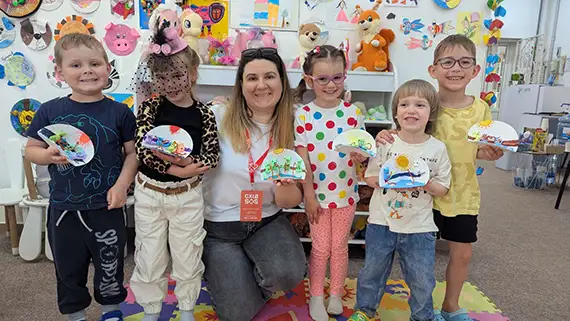 The organisation East SOS offers educational and creative activities.
In the Zaporizhzhia region in south-eastern Ukraine, the organisation Un Monde pour les Ukrainiens assists both displaced residents and populations living near frontline areas. Since the start of the conflict, its centre has welcomed particularly vulnerable people, providing ongoing medical and food support as well as psychological assistance. As a space for protection and respite, the centre has supported over 2,700 people.
Facilitating Integration for Displaced and Refugee Families
Less directly affected by fighting, western Ukraine hosts a significant number of displaced people, creating substantial challenges for social cohesion and integration.
In the village of Nyzhne Selishche, in the Carpathian Mountains, the cooperative Longo Maï, the Transcarpathian Association for Local Development (ATDL), and the organisation CAMZ have joined forces to help displaced families rebuild their lives. A reception centre called The Refuge has been established, and housing has been rehabilitated. Since the beginning of the conflict, 120 people have been accommodated. The organisations assist families from eastern Ukraine with socio-administrative procedures and foster integration by developing income-generating and community-building activities with local villagers, including bakery, agriculture, and crafts.
"It was volunteers from Nyzhne Selishche who invited us to join their community," explains Anastasia Sokolovska, displaced from the Zaporizhzhia region. "With my family, we were able to move into a renovated house and restart our mushroom cultivation and artisanal jam business. Today we work, our son is in school here, and we are part of village life."
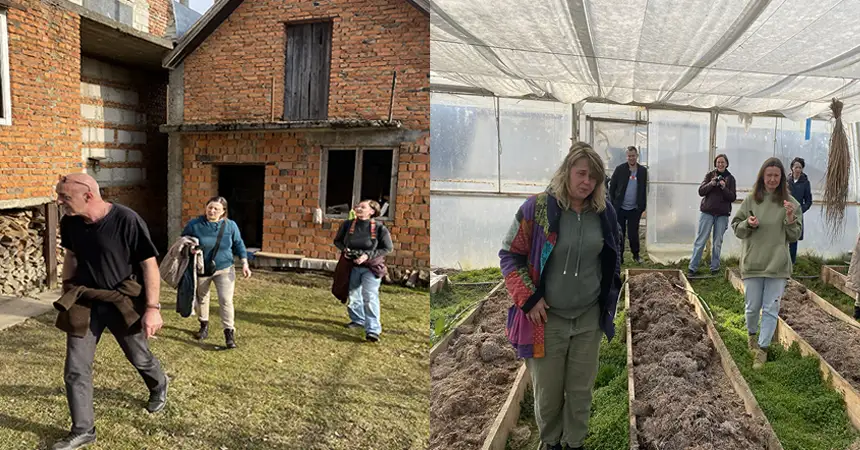 In Nyzhne Selishche, the Longo Maï cooperative supports displaced families with housing in renovated homes and agricultural training to help them regain employment.
In Chișinău, Moldova, the organisations Moldova for Peace and Motivatie welcome Ukrainian refugee families and support them in their integration process. They provide essential material assistance, organise transport for medical, administrative, or personal appointments, and offer psychological and legal support. They also facilitate access to employment and develop cultural activities to promote exchanges with the Moldovan population. Awareness-raising initiatives are conducted to foster reception and inclusion of refugees, with particular attention given to people with disabilities.
Defending Human Rights
Strengthening and protecting human rights is essential to achieving lasting peace. Documenting violations in occupied territories and analysing the conflict’s impact on civil society are crucial to ensuring victims ultimately have access to justice and redress.
The NGO Magnolia, active in Ukraine for over 20 years to protect children’s rights, focuses on locating missing children, particularly those illegally displaced to occupied territories or to Russia. To locate these children, the NGO collaborates with the police, media, and international organisations, uses intelligence tools, and operates a dedicated emergency hotline. Its team of lawyers and psychologists supports families of missing children. More than 300 children have been recovered, half of whom were illegally displaced or deported to Russia.
The organisation EPLN provides urgent assistance (food parcels, clothing donations, medical support) for people detained or affected by territorial occupation, evacuated to safer regions, along with extensive legal support. It works to repatriate freed prisoners forcibly deported to Russia and documents crimes committed in detention to assist victims in judicial proceedings nationally and internationally.
"Thanks to the support of Fondation de France, our organisation has been able to conduct follow-up visits, document human rights violations, research prisons, advocate for individual cases, and contribute to reforms of Ukraine’s penitentiary system," says Hanna Skyipka, head of the organisation PPU, assisted by EPLN.
The NGO Luhansk Regional Human Rights Centre Alternative collects and analyses information on civilian living conditions in Ukrainian territories occupied by Russia. This data informs international advocacy denouncing human rights violations and mistreatment of civilians. Its publication Life under Occupation is regularly circulated nationally and internationally.
Providing Psychological Support Amid War Trauma
The war in Ukraine has caused deep psychosocial wounds, affecting millions of people facing bereavement, trauma, anxiety, and depression. Psychological support needs are immense, for both civilians and aid workers exposed daily to extremely violent situations.
The NGO Alliance UA, in collaboration with Belgian NGO Protect Humanitarians, runs a mental health and psychosocial support programme for humanitarian workers operating on the frontline. It offers consultations, psychological first aid training, mentoring, and health insurance.
Meanwhile, the NGO Angels of Salvation provides direct support to populations affected by conflict. Particularly active in evacuating civilians from the Kharkiv, Dnipro, Donetsk, Zaporizhzhia, and Kherson regions, the NGO has established a comprehensive psychological support system. This includes a continuously accessible hotline staffed by psychologists and mobile support teams assisting both civilians and the organisation’s staff.
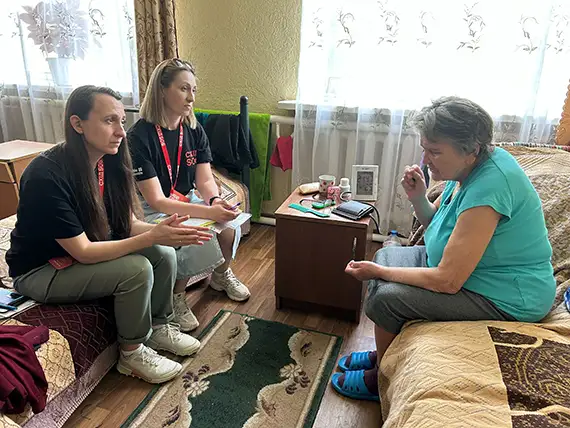 The NGO Angels of Salvation provides local psychological support to residents of the town of Vapniarka.
Addressing Environmental Challenges
The conflict has had dramatic and lasting environmental impacts: chemical pollution of soil, water, and air, destruction of nature reserves, and severe damage to ecosystems, directly affecting the quality of life of local populations.
In response, the Ukrainian Nature Conservation Group (UNCG) brings together scientists, experts, and activists to protect biodiversity. It works to create protected areas and implement international environmental legislation in Ukraine. Following the destruction of the Nova Kakhovka hydroelectric dam on 6 June 2023, which caused severe flooding in dozens of southern towns and villages, the organisation conducted an in-depth analysis of impacts on wildlife and flora. The Velykyi Luh, the large floodplain affected by the dam collapse, is a unique natural and cultural space crucial to biodiversity conservation. In 2025, a report documenting the consequences of this catastrophe was published.
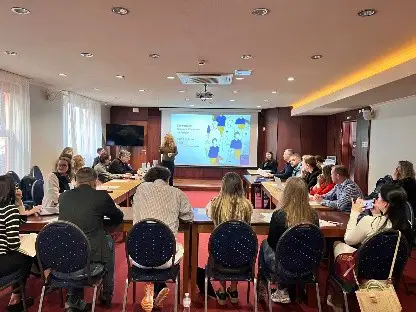
On 27–28 October, all Fondation de France partners gathered in Uzhhorod, western Ukraine, to discuss future perspectives, consider various scenarios, and co-develop strategies tailored to each organisation’s needs. This meeting provided an opportunity for reflection in an especially challenging context, as bombardments had intensified in recent weeks. "Fondation de France is a true ally: it listens, supports, and helps advance all those working for Ukraine in these difficult times. I am very proud to be part of this group and grateful for this opportunity," says Laura Dittel, Director of the Carpathian Foundation Slovakia.
Photo credit : © Angels of Salvation, © East SOS, © Longo Maï.
READ FURTHER
→ Solidarity with Ukraine: “Four Years After the Start of the War, Ukraine Faces Major Challenges”
→ Solidarity with Ukraine: 3 Years of Steadfast Support
→ Solidarity with Ukraine: associations on the front lines
→ Solidarity with Ukraine: lasting commitment from Fondation de France
→ Solidarity with Ukraine: two years of action
→ Solidarity with Ukraine: The Work Never Stops
→ Solidarity with Ukraine: a year of action
→ Emergencies: rebuilding lives over the long term