

"One year after Cyclone Chido, Mayotte is still recovering"
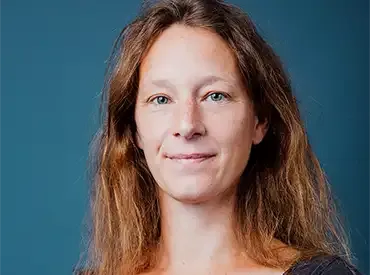 Karine Meaux, Head of Fondation de France’s Emergencies department, looks at the current situation in Mayotte and Fondation de France’s priorities in the hard-hit territory.
What is the current situation in Mayotte?
One year after the disaster, the situation remains very difficult. Since spring, the food crisis has eased, but access to water remains very problematic, with repeated interruptions due to ongoing work. On the educational front, the start of the new school year was also complicated, with sometimes three or four shifts of classes a day. Reconstruction is progressing, but faces several obstacles: the complexity of procedures for building sites and the rising cost of materials, which is having a major impact on the local construction sector. Finally, as the new hurricane season gets underway, the fear of another major episode is rekindling the anxiety of residents, many of whom are still living in vulnerable housing. Despite this, civil society remains extremely dynamic. Although the associations have seen their premises destroyed and are suffering from a shortage of human resources, they continue to work as closely as possible to meet the needs of the people of Mayotte.
What are Fondation de France’s priorities in this context?
In the first few months following the cyclone, our priority was to meet basic needs: shelter, food, access to drinking water and healthcare, psychosocial support, etc. The challenge now is to consolidate what has been achieved, particularly with the most vulnerable populations, focusing on the most marginalised children, young people and women. In terms of food, we are supporting farmers in particular to boost local production and enable small shops to reopen. The aim is to strengthen the island’s food self-sufficiency. After repairing pipes and standpipes, we are now focusing on water storage and production initiatives. In terms of health, we support associations that carry out preventive and outreach activities, working with isolated people who have no access to medical facilities. Mental health is a real issue, particularly the training of those working in the field to help populations overcome their anxieties.
Reconstruction is continuing: we are working with associations that are directly involved on the ground to provide technical support, particularly in the most precarious neighbourhoods, ahead of the large-scale works planned for early 2026. We also remain very involved in the economic recovery, in particular by supporting schemes to help small business owners and craftsmen. In the education sector, we support a large number of associations that offer cultural and sporting activities, educational support and meeting places to recreate social links. Lastly, the environment is a priority shared by all: preserving biodiversity and ensuring a respectful reconstruction of ecosystems are vital for the territory.
How do the various organisations involved work together?
Despite a complex local and geopolitical context, the collaboration between organisations is remarkable. Our discussions with government departments and local authorities are regular and constructive, thanks to the constant involvement and commitment of those working on the ground. We have set up quarterly meetings with the Departmental Council and regularly organise progress reviews with our partner associations, either individually or grouped by sector (environment, housing, cultural and sporting activities, etc.). They have a detailed knowledge of the area and play a key role in acting as intermediaries and coordinators. This close cooperation ensures that our actions are effective and that all residents and their needs are taken into account. In the space of a year, Fondation de France has visited Mayotte 8 times to take stock of developments in the situation, monitor the progress of the initiatives supported and strengthen synergies between partners.
One of our priorities over the coming months is still to develop cooperation and strengthen the intervention capacities of the voluntary sector. We have launched a financial and organisational capacity-building programme for our partner associations, to enable them to manage their funds more effectively, modernise their tools and become more autonomous. At the same time, we are carrying out an overall assessment of the support available to local associations. The aim is clear: to strengthen the coordination of existing mechanisms and to consolidate the associative fabric of Mayotte on a long-term basis, in order to prepare civil society for future hazards.
or by cheque made payable to: Fondation de France – Solidarité Mayotte 60509 Chantilly CedexTO READ FURTHER
→ Solidarity with Mayotte: 1 year of action
→ Solidarity with Mayotte: taking action on access to healthcare and mental health
→ Supporting the new school year in Mayotte
→ Solidarity with Mayotte: "Six months after the cyclone, the challenge is to join forces to rebuild for the long term"
→ Solidarity with Mayotte: 6 months of action
→ Solidarity with Mayotte: "Three Months After the Disaster, the Situation Remains Critical"
→ Solidarity with Mayotte: 3 months of support
→ Solidarity with Mayotte: Two Months Supporting Communities Hit After Cyclone Chido